Showing posts with label Amateur Radio. Show all posts

January 1, 2026

2025 - A Ham Radio Year In Review

2025 was a great year to be alive. It was also a great year for amateur radio with excellent sunspot activity and conditions. One of my favorite radio activities is radio fox hunting. I ran several fox hunts in 2025. I really enjoy hiding the transmitter and helping people new to radio fox hunting learn how to use simple techniques and equipment to find it.  I love seeing their happy faces when they find it. So much fun!

Here are a few of my radio related statistics as of 12/31/2025. I find it satisfying to review statistics like these to see how I am progressing. The truest contest is not with others, but with your former self, as learning and growth quietly reshapes who you become.

LoTW
  • 18,341 QSO records
  • 12,434 QSL records
  • Award progress
    • DXCC Challenge Award = 880 / 1000 = 88%
    • WAS FT4 = 50 / 50 = 100% complete
QRZ.com
  • Leaderboard
    • Most Band-Countries Worked = 893
    • Most Countries Worked = 190
    • Most Confirmed QSOs = 13,354
  • Award progress
    • 12 Days of QRZ (2025) 
      • Completed 40m, 20m, 15m, 12m, 10m 
    • Grid Squared Award (out of 32,400 possible in the world)
    • United States Counties Award - My ultimate goal is to work all 3,143 US Counties (located in the 50 States + DC). I am 70% there. It has become increasingly difficult to collect new counties. The hunt continues.
For 2026, I plan to continue working many more DX band-countries toward my goal to earn the DXCC Challenge Award and confirm contacts with at least 100 new US counties. QRZ has a new award called the '250th Anniversary of the United States of America' that I am looking forward to complete in celebration of the birthday of our great nation. I remember the wonderful 200th Anniversary in 1976 and I am delighted to see the 250th arrive. I am proud to be an American. I have never made a contact with an AF (Armed Forces) station. 2026 is going to be my year to do so. If you are an AF station, lets set up a scheduled contact. I would love to have you in the log on our 250th Anniversary.

My homebrew 80m Skywire antenna was destroyed in a big windstorm that took out a couple of redwoods back in 2023. I have a new replacement 160m Skywire antenna that I plan to hoist up into the trees in 2026. Looking forward to having access to 160m and making contacts. See you on the radio.


Good DX and 73, NJ2X

February 2, 2024

Meet the students using radio waves to contact the ISS

This is an excellent NBC's Today Show news program with Harry Smith reporting about students using amateur radio to contact the International Space Station.


International Space Station


Good DX and 73, NJ2X

October 12, 2022

Two-Way Radio Communication for Scouts

Radio and scouting are a great combination.  Scouting recognizes the interest of scouts in radio and reflects this in the annual Jamboree on the Air (JOTA) and the Radio Merit Badge.  JOTA is the world's largest scouting activity.


Scouting is the ideal time to earn an amateur radio license.  Making your first amateur radio contact with your own call sign as a scout is amazing experience. Making contact with your other scouting friends is even more fun.

Scouts BSA Radio Merit Badge

A two-way radio is also an important piece of communication and safety equipment on backcountry outings where mobile phone coverage is absent.  Scouts can use FRS walkie-talkies to communicate with each other while at camp or hiking with no license required.  Amateur radio licensed scouts can use their own amateur radio two-way radios.  Regardless of the class of equipment, it is important for scouts to learn good radio operating practices.  Here are some helpful guidelines to good operating practices based on the Scout Law.

Good Operating Practices

  • Be prepared - Think about what you are going to say before transmitting.

  • Be trustworthy - Take care of troop radios and return them in the same condition they were issued.

  • Be loyal - Keep your antenna in a vertical position and elevate it to improve signal strength.  If you are in a structure, try moving near an open window or moving outdoors to improve signal strength.

  • Be helpful - Press the push-to-talk button and pause one second before speaking.  There is a short delay before your radio begins transmitting.  Pausing will prevent your message from being cut off.

  • Be courteous - When initiating a transmission, first identify your intended recipient then identify yourself.  This avoids confusion on shared frequencies.  Example: “Jill this is Jane, do you copy?”

  • Be kind - Give the person you are calling time to respond.  Remember, they may have heard your call and are unable to respond immediately.

  • Be thrifty - Use short, clear, and concise messages over the radio to save battery life.  Repeat essential parts of the message to help make sure it is understood.  Keep your radio on and monitor for safety, accountability, and patrol/troop messages.

  • Be clean - Speak across the radio microphone rather than directly into it in order to produce a clear undistorted message.


Scout radio operations also benefit from the use of standardized vocabulary of basic radio terms.  These terms are known as pro-words.

Radio Pro-Words

  • Mayday - Used as a distress call in an emergency situation.  When used, repeat three times: mayday, mayday, mayday.

  • Correction - I made an error in this transmission.  I will continue with the last correct word.

  • Radio check - This means, “What is my signal strength and readability?”  Responses include: “Loud and clear” (or 59), “Weak but readable,” “Weak and distorted,” “Strong and distorted.”

  • Over - I have finished speaking.

  • Say again - Please repeat your last message.

  • Stand-by - This means, I acknowledge your transmission.  Please wait for me to respond.

  • Go-ahead - I am listening and can respond.  Please proceed with your message.

  • I spell - Say this prior to spelling a difficult or ambiguous-sounding word.

  • Read back - Please repeat my entire transmission back to me.

  • Roger - Message received and understood.

  • Affirmative / Negative - Yes / No

  • Out - Our conversation is finished.


The ability of Scouts to communicate using radio under difficult conditions is enhanced by having the ability to spell words using the international phonetic alphabet.  There are times when our spoken words cannot be understood when transmitted over the radio.  This can be caused by a weak signal or high noise levels.  Often, our words can be understood via radio by spelling the words out using the phonetic alphabet.  Knowing how to do this is a critical survival skill for Scouts.

Phonetic Alphabet

A Alpha

E Echo

I India

M Mike

Q Quebec

U Uniform

Y Yankee

B Bravo

F Foxtrot

J Juliet

N November

R Romeo

V Victor

Z Zulu

C Charlie

G Golf

K Kilo

O Oscar

S Sierra

W Whiskey


D Delta

H Hotel

L Lima

P Papa

T Tango

X X-ray


Have fun in the outdoors and be prepared.  Having a radio transceiver and knowing how to use it is an invaluable asset since it provides additional options to communicate in the event of an emergency.


Good DX and 73, NJ2X


April 27, 2021

Last Man Standing Special Event March 2021 Certificate!

My Last Man Standing Special Event March 2021 certificate arrived today!  Fun!  A big THANK YOU to the show and hams for putting on wonderful event.


Good DX and 73, 
NJ2X

February 15, 2021

Ten Terms and Abbreviations Every New Radio Amateur Needs to Learn

Amateur Radio, like any other area of interest has its own vernacular.  Fortunately, there are an abundance of resources available to help decode what these terms mean.  Here are ten terms that every new ham needs to learn with links to the associated Wikipedia page for each.


Good DX and 73, NJ2X

February 7, 2021

40m Skywire Loop Antenna Experiment

I have been curious about skywire antennas since becoming a ham.  I first learned about skywire antennas initially from a contacts made with hams operating on skywire loop antennas.  Over the years I have received many recommendations to give one a try.

I decided it was high time to build my own homebrew skywire loop antenna with the goal of constructing it from various pieces-parts available in the shack.  There is simply no better way to spend a Sunday than making something in the workshop with the HF transceiver running.

A full wavelength skyloop antenna has a nominal impedance of 120 ohms depending on various factors.  The ideal antenna impedance is 50 ohms which would match a 50 ohm coaxial cable and 50 ohm transceiver.  A skywire antenna would work more efficiently with a 2.5-to-1 balun to transform the antenna impedance to more closely match the 50-ohm coaxial cable.  

A balun is an electrical device that converts between a balanced signal and an unbalanced signal. There are many different types of baluns including those that transform impedances.

Unfortunately, I didn't have a 2-to-1 or 2.5-to-1 balun in the workshop.  I did have a 1-to-1 balun and a box of type-43 ferrite beads.  I decided using a 1-to-1 balun and ferrites would be close enough and help keep common mode currents off my coaxial cable.  I also had an unused coaxial antenna center conductor, a spool of wire, and a few insulators.  These were enough parts to give the 40m skyloop a ago!

A skywire loop antenna is exactly as it sounds a single wire in the shape of a circle (ideally) some other shape such as a square, rectangle, or triangle and suspended horizontally.  To calculate resonance of #18 wire, the following formula can be used:

Length in feet = 1005 / frequency in MHz

For example, at the FT8 40m calling frequency a resonant skywire = 142 ft. = 1005 / 7.074 Mhz

Skywire Loop Antenna Bill of Materials
  • 136 ft of Poly-STEALTH 18 gauge wire from Davis RF
  • qty 11 type-43 ferrite beads 1/2" snap on
  • CE-1 Deluxe Dipole Antenna Center Feed from Spi-Ro Manufacturing
  • 1-to-1 Balun Designs Maxi Choke Balun (5kW) dual core model 1115du
  • qty 3 "dog-bone" type insulators
  • Self-sealing silicon tape
  • 3M electrical tape
  • Stuff - dielectric water proofing filler for coaxial connectors

CE-1 Deluxe Dipole Antenna Center Feed

1-to-1 balun connected with LMR400 with ferrites connected to the antenna center feed 

I used trees to support my skywire loop antenna.  Two of the corners were up around 40ft and the other two were on the low side at around 20 ft.  Not ideal but good enough to tune up and work some DX.  I used floating insulators when hanging the antenna.  Floating insulators allows free movement of the insulators and antenna wire while adjusting the antenna.  It allows provides freedom of movement due to tree sway.

The goal in hanging a skywire loop antenna is to maximize the enclosed area of the antenna.  Given infinite hangers, a circle would yield the maximum enclosed area.  Fortunately, the skywire doesn't require perfection.  A rectangle with four hanging points works very well too.

The Poly-STEALTH antenna wire from Davis RF is wonderful to work with - strong, light, and nearly invisible.  136 ft. of #18 wire weighed only 0.136 lbs. which is much less than my multiband fan dipole.  The insulators and rope weighed more than the entire antenna.

Initial Results

I was delighted to find that I my Kenwood TS-480SAT's build-in antenna tuner would tune the skywire on 40m, 20m, 17m, 15m, 10m, and 6m effortlessly.  This is a great way to begin testing a new antenna - no tuning or trimming.  Next I fired up FT8 and worked 20m and 40m contacts as the grey-line passed on into the evening.  The signal-to-noise ratio seemed improved as compared to my fan-dipole antenna.  I quickly made contacts with stations near and far including:
  • 40m KN4APP, NV - 203 miles
  • 40m AB6ZQ, CA  387 miles
  • 40m KE7JBK, AZ - 597 miles
  • 40m N7DBO, UT - 600 miles
  • 40m KF7UGG, OR - 618 miles
  • 40m K7EAZ, AZ - 694 miles
  • 40m KS7TU, WA - 792 miles
  • 40m KG5ZZB, TX - 1460 miles
  • 20m KB0BRO, MN - 1565 miles
  • 20m W9RF, IL - 1797 miles
  • 20m KH6AN, HI - 2353 miles
  • 40m N3MK, VA - 2527 miles
  • 20m JA9DJX, Japan - 5286 miles
  • 20m LU8DN, Argentina - 6597 miles
  • 20m ZL1IA, New Zealand - 6732 miles
The 40m Skywire experimental antenna was a huge success.  The antenna worked perfectly the first time I tuned it up.  It is remarkable how flexible the antenna is using just a build-in antenna tuner.  No adjustment or fine tuning was required to get on the air on multiple bands.  It also performed very well at the bottom of the sunspot cycle.  Overall, I am pleased with the outcome and would recommend a skywire loop antenna to anyone with suitable supports, a few inexpensive parts, and a Sunday to experiment.  It is a surprisingly good antenna for very little cost.

I am looking forward to trying out the new skywire antenna on 17m, 15m, 10m, and 6m when the bands are open.  I am also looking forward to a future experiment with an 80m skywire loop antenna.


Good DX and 73, NJ2X

January 22, 2021

Collection of vintage amateur radio books and magazines

I stumbled on a fascinating collection of links to vintage radio frequency books and magazines.  It contains some really useful amateur radio relevant material.  While browsing, I found several outstanding books on antennas that inspired ideas for future projects.  If you have an interest in radio, this site is definitely worth checking out.


Good DX and 73, NJ2X

October 16, 2020

What is a radiogram?

A radiogram is a formal message routed by amateur radio operators through the National Traffic System (NTS).  A radiogram is initially written down using a paper form to help organize and normalize the information.  The radiogram is relayed to volunteer radio operators who also use the radiogram paper form to copy and pass the message onward.

The radiogram has been in use for a very long time in amateur radio and retains its usefulness in emergency situations when fragile infrastructure-based communication such as Internet and telephone fail.


Good DX and 73, NJ2X

August 21, 2020

Radio Scouting: Earning the Radio Merit Badge at Summer Camp


The Radio Merit Badge was earned by 5,205 Scouts in the US in 2018 representing a 10.9% drop from the year prior.  We hams need to make sure we step up our support of scouting and act as counselors for the radio merit badge.  The Radio Merit Badge requirements are demanding and require both classroom learning as well as applied learning in front of a radio.  The radio merit badge looks great on a scout uniform sash with its wonderfully designed Morse code message and lighting bolts.


Scouts BSA Radio Merit Badge

I had the privilege to teach the radio merit badge with my daughter's Scouts BSA troop while at summer camp in the Sierras in Northern California in 2020.  We had a small group of scouts and parents which provided the scouts with more radio operating time and more time for discussion and questions about radio.  This made the merit badge class sessions more fun and engaging.

The scouts had a blast learning hands-on on how to setup the entire wilderness radio station including:
  1. Generator
  2. Power supply
  3. Kenwood TS-480SAT (HF+6m transceiver)
  4. Yeasu FT-8800 (2m / 70 cm FM transceiver)
  5. Kenwood TH-F6A (triband FM HT)
  6. External speaker
  7. 40 Meters home brew wire dipole
  8. 20 Meters rotatable dipole
  9. VHF/UHF antenna
Emergency communication rotatable dipole and VHF/UHF antenna packed up in its storage bag


The scouts made numerous contacts on 40 Meters, 20 Meters, 2 Meters, and 70 Centimeters.  We also tuned up and down on the shortwave broadcast bands and listened in on various programs from around the world.  This was an eye opening experience for the scouts who had never heard shortwave broadcasting nor made amateur radio contacts before.

Kenwood TS-480SAT Transceiver

The rotatable dipole worked like a champ having been serviced in the work prior to camp.  While on the workshop bench before camp, it was discovered that one of the elements had developed a break due to corrosion.  The repair was straightforward requiring a quick cleaning of the corrosion, resoldering, and shrink-wrapping.  The rotatable dipole helped demonstrate the directional nature of dipole antennas to the scouts.

Emergency communications rotatable dipole with VHF/UHF Antenna on top setup at summer camp 


One of our scouts, Sadie, earned her FCC Amateur Radio Technician license (KN6JYE) just prior to arriving in camp.  She had a blast using her license for the first time on VHF/UHF simplex calls, calls over area repeaters, and checking into various area nets including a fun 2m simplex net.  By the way, Sadie and her troop are running a popcorn fundraiser to help keep their scout program going.  Please stop by Sadie's Trails End popcorn storefront to make a purchase and support scouting and her troop.

Sadie, KN6JYE making contacts at elevation 3187m on top of Mount Lassen, California

The scouts were amazed and excited to experience the thrill of DX communication for the first time.  We made contacts on 40 Meters to other states and countries including Hawaii and New Zealand.  DX is alive and well even at the bottom of the solar sunspot cycle.

Amateur Radio Operator scout uniform strip

A big THANK YOU to the patient hams who talked with the scouts and helped them log their very first amateur radio contacts.  These hams helped the scouts to successfully earn their radio merit badges and we couldn't have done it without them.  It is the hands-on learning and radio operations that is the most inspiring and engaging aspect of the radio merit badge.  Several of the scouts expressed their enthusiastic interest in earning their own amateur radio licenses.  Please support scouting, radio merit badge activities, the annual Scout Jamboree on the Air (JOTA) special event, and youth learning the ropes on the air.  The next generation needs our support and encouragement just as much as we all did when we were their age.  Remember, it is youth who are the future of the amateur radio.

Good DX and 73,

NJ2X


July 20, 2020

Anticipation is ... Monitoring the FCC ULS

There is nothing quite like the feeling of happiness and anticipation monitoring the FCC ULS after passing your FCC Technician exam.  What will my call sign be?  I hope it is a good one.  Wouldn't it be amazing if it included my initials?  Has my new call sign posted yet on ULS?  How about now?  Better check again a little later... Where is it!?  Cue the Carly Simon song, anticipation... is making me wait.  

The wait is part of the journey and part of the joy of becoming a ham.  It is just as much fun for Elmers too.


Good DX and 73, 

NJ2X

August 25, 2018

Radio Merit Badge at Camp Lehi

The Radio Merit Badge is earned by approximately 6,500 Boy Scouts in the US each year.  The Radio Merit Badge requirements are demanding and require both classroom learning as well as applied learning in front of a radio.  I really like the design of the merit badge with its hidden Morse code message and lighting bolts.

Radio Merit Badge
I had an opportunity to teach the radio merit badge at a recent Merit Badge Pow Wow at Camp Lehi here in the Bay Area.  My co-instructor for the course was Ray Wentz, W6LPW.

Camp Lehi is a beautiful location in the Santa Cruz mountains

The night before the course the Merit Badge Pow Wow organizer (Jon) and I installed three antennas: a 40 meters home-brew wire dipole, a 20 meters rotatable dipole, and a vhf/uhf antenna.  We setup the radios and class room in the great outdoors under a couple of canopies.  Power was provide a generator.

Rotatable Dipole and VHF/UHF antenna 

Home brew 40 Meters wire dipole between two trees
The 40 Meters wire dipole worked really well for the scouts.  They made contacts with 100W into the North Carolina to the East, Vancouver to the North, San Diego to the South, and Hawaii to the West.  We were using a Kenwood TS-480SAT.  It was a lot of fun to see the scouts make their first radio contacts ever.


Ray tried several times to call on the local repeater using his HT and found no one to talk to.  Fortunately 40 Meters was in good shape and there plenty of hams for the scouts to talk to.

The rotatable dipole was not functioning properly.  I had brought my antenna analyzer and measured SWR exceeding 3.0.  We didn't have time to determine where the failure was occurring in the system.  That will be a job for another day back at the shack.

A big thank you to the patient hams who talked the scouts and helped them log their first contacts.  This event helped create interest in radio.  Several of the scouts mentioned their interest in studying for their own amateur radio licenses.  Support your local scouting organization and radio merit badge, jamboree on the air, and other outstanding programs.

Good DX and 73,
NJ2X


March 30, 2017

Amateur Radio Backpacking Checklist

Amateur Radio and backpacking are made for each other.  What could be better than enjoying two great hobbies at the same time in the great outdoors?  Amateur radio also adds an element of safety to backcountry adventure by providing a method of communication in the event of an emergency.

Photo by Michael W. Maher
Golden Trout Wilderness


Here is a checklist to help you plan your next backpacking trip:

  • Pack weight - keep it light as possible.  40 lbs or less for adult males in good shape.  Weigh your pack before you depart and adjust accordingly.
  • 10 essentials - these are non-negotiable items every backpacker needs.  Check to make sure all 10 essentials are in your pack before you leave.
  • Extra water carrying capacity - Water is key to survival when backpacking.  There are times when extra water is helpful.  Pack a spare lightweight 1 or 2 liter collapsible water container.  Being able to fill up with extra water will come in handy when trekking over dry areas or when preparing a meal.
  • Program your radios - We enjoy backpacking with our amateur radio VHF/UHF FM handheld radios (Handie Talkies).  Before the trek always take the time to research the area to identify amateur repeaters and program your radios.  This enables maximum usage of the radios during the trek.
  • Charge your batteries - The night before a trek be sure to charge your radio batteries and any spares you intend to bring.
  • Zip Lock Baggies - Pack a couple of 1 gallon ZipLock Baggies.  These make lightweight and inexpensive dry-sacks for maps, radios, books or anything else you want to keep dry.  These can save your gear in the event of rain or when crossing a stream.
  • Large Garbage Bag - One or two large black garbage bags are lightweight and versatile. These can be used for a variety of purposes including a pack cover, rain poncho, food storage, sleeping bag cover, dry bag, or trail trash collection.
  • Improved Antennas - Consider packing a "rat-tail" or j-pole for use with your HT for improved antenna performance over the rubber-duck antenna.
Hope you find this checklist help on your next backcountry radio adventure.

Good DX and 73, 

NJ2X


Related Articles:


© Michael W. Maher and NJ2X.COM, 2017. Unauthorized use and/or duplication of this material without express and written permission from this blog’s author and/or owner is strictly prohibited. Excerpts and links may be used, provided that full and clear credit is given to Michael W. Maher and NJ2X.COM with appropriate and specific direction to the original content.

November 20, 2016

Social Media for Radio Amateurs: Tip #1 - IFTTT

This post is part of a series about social media for amateur radio.

Overwhelming Success
The Internet (including social media) is a powerful resource for radio amateurs.  It is a great way to both share and access information about amateur radio via the Internet.  The Internet's overwhelming success has created a new challenges with the overwhelming number of websites and apps available.  It is becoming increasingly difficult to manage the the Internet resources we regularly utilize.

IFTTT (If This Then That)
IFTTT is a way to "put the Internet to work for you".  IFTTT stands for If This Then That.  IFTTT is pronounced by enthusiasts as a word rhyming with "gift".  IFTTT is a web service tool that that can be used to automate web resources.  It is fairly easy to use and supports automation with over 110 different services called "channels" including social media sites like Facebook, Twitter, Blogger, WordPress, YouTube, and etc.


IFTTT.com


What can you do with IFTTT and social media?
IFTTT provides a fantastic number of automation "applets" that radio amateurs can use to automate work with social media.  Here are a few examples:

  • Share your new Blogger posts to Twitter
  • Share your new Blogger posts to Facebook
  • Post WordPress posts to Blogger
  • Post new YouTube videos to your Wordpress blog
  • Automatically send a tweet thanking your new Twitter followers
Hope this tip helps you automate some of your repetitive social media work with either your amateur radio club or for your own station activities.


Good DX and 73, NJ2X


© Michael W. Maher and NJ2X.COM, 2016. Unauthorized use and/or duplication of this material without express and written permission from this blog’s author and/or owner is strictly prohibited. Excerpts and links may be used, provided that full and clear credit is given to Michael W. Maher and NJ2X.COM with appropriate and specific direction to the original content.

June 23, 2016

Field Day 2016 is here!

ARRL Field Day is the most popular on-the-air event held annually in the US and Canada. On the fourth weekend of June, more than 35,000 radio amateurs gather with their clubs, groups or simply with friends to operate from remote locations.

ARRL Field Day 2016 logo showing a boot tread with the ARRL logo enbedded next to "FD16".
ARRL Field Day 2016
The objective of Field Day is to work as many stations as possible on any and all amateur bands (excluding the 60, 30, 17, and 12-meter bands) and to learn to operate in abnormal situations in less than optimal conditions. Field Day is open to all amateurs in the areas covered by the ARRL/RAC Field Organizations and countries within IARU Region 2. DX stations residing in other regions may be contacted for credit, but are not eligible to submit entries.

Field Day is always the fourth full weekend of June, beginning at 1800 UTC Saturday and running through 2059 UTC Sunday. Field Day 2016 is June 25-26.

Hope to hear you on the air.

Good DX and 73, NJ2X

October 9, 2015

Completed DXCC on Phone

I was very excited to see that my QSO's (17m and 20m SSB) with the DX Expedition E51MKW (North Cook Islands on the Manihiki Atoll) were confirmed today.  Propagation was very poor.  However, the expedition team did a stellar job in pulling stations out of the noise.  I am very impressed and pleased on how quickly the team uploaded their contacts to the Logbook of the World (LoTW).  The Manihiki Atoll is magnificent.  I am considering adding a visit there to my bucket list.

Manihiki Atoll (aerial photo by NASA)

This was the final contact (number 100) I needed to complete my ARRL DXCC Phone award.  All contacts were completed using wire antennas with 100 Watts of power.  Looking forward to receiving the certificate and add another to the shack walls.


Good DX and 73, NJ2X

October 2, 2015

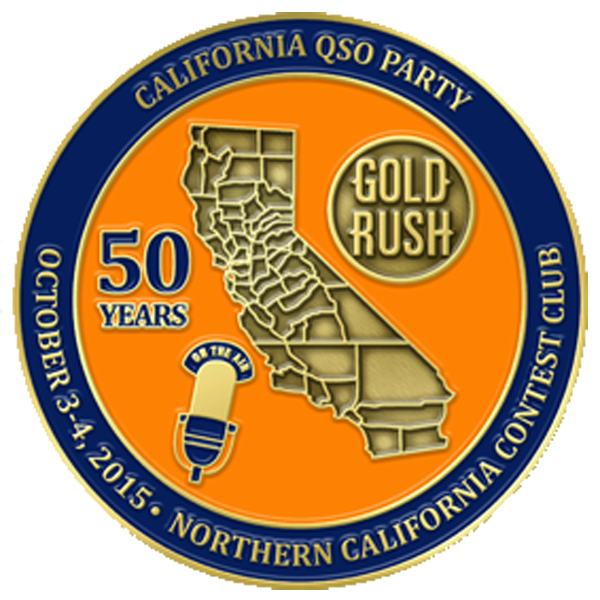
50th Running California QSO Party

Be sure to join in the fun on October 3-4, 2015 with the Clifornia QSO Party.  The QSO part starts at 1600 UTC October 3, 2015 and ends 220 UTC October 4, 2015.

There is a way to qualify for a really cool looking Gold Rush Commemorative Coin.  Check out http://www.cqp.org for complete rules and information.


Hope to hear on the air.

Good DX and 73, NJ2X

September 20, 2015

Hiram Percy Maxim Award Recipient Anna Veal, W0ANT

Sunday's are a perfect day for reflection and inspiration.  We were inspired today by Anna Veal, W0ANT, who is the 2015 Hiram Percy Maxim Award Recipient.  This article also appears in the October 2015 edition of QST on page 82.  If you haven't read the article then do yourself a favor and read it now.

Hiram Percy Maxim, c. 1914


Good DX and 73, NJ2X
June 29, 2014

2014 Field Day Fun @ Monterey Bay Amateur Radio Association (N6IJ)

Field Day is FUN!  There is nothing quite like setting up and operating outdoors.

For some hams it is challenge of setting up temporary radio operations in the great outdoors.  For these amateurs, assembling the gear, hoisting and adjusting antennas, solving problems, and making everything work is what it is all about.

Other hams it is about lighting up the ether and operating in the wild.  For these amateurs, the fun is in making great contacts in the great outdoors with perhaps a bit of the old competitive spirit mixed in.

For Field Day 2014, KC2VSR, NJ2X, and KG6UBG set up two outdoor stations at the home of the Monterey Bay Amateur Radio Association (MBARA) headquarters in Marina, California.  We operated using the MBARA call N6IJ.  The site was formerly part of the Fort Ord military base which gave the operations a historical feel.

California weather is famously mild and we were not disappointed during Field Day 2014.  The skies were blue and there was a light cool breeze coming off Monterey Bay that encouraged a sweatshirt or jacket most of the day.  We we felt like we had little too much sun at the end of the day.  We forgot to pack sunscreen; though, we did remember to wear hats.

For antennas, we had a multi-band beam, a wire dipole, and NJ2X's portable rotatable dipole.  The beam was hoisted up onto a pole about about 15 feet and was used with the 20 meters station.  KG6UBG ran the 40 meters station through a ladder line fed wire dipole.  NJ2X and KC2VSR setup the portable rotatable dipole for use with  the 20 meters station.  We rotated the beam and dipole with the aid of ropes attached to the antennas.  A gentle pull on the rope and the antenna could be pointed in any direction.

NJ2X's Portable Rotatable Dipole in the bag

KC2VSR setting up the portable rotatable dipole

K2CVSR with the portable rotatable dipole up and ready for use (California blue sky)

KC2VSR with the 20 meters field day station
KG6UBG running the 40 meters field day station

A few lessons learned for next year:

START
  1. Pack sunscreen - our wide brimmed hats alone didn't keep us from getting a little too much sunshine
  2. Pack more snacks - we lost a bit of operating time making a mid-day food run
  3. Encourage a few more folks to come out and play radio - the more the merrier
  4. Fire up the grill - hot dogs and hamburgers would be terrific next year
STOP
  1. Failing to inspect the antenna bag beforehand to make sure technical info and everything needed is inside - we discovered that we had not packed a manual needed to setup the antenna.  Through trial and error we figured out how to put up the mast and tune the antenna for 20 meters; though, at the expense of operating time.
CONTINUE
  1. Bringing KG6UBG's Honda generator - small, quite, and ran flawlessly during the day providing power to our amateur radio stations
  2. Bringing the rotatable dipole - setting up a temporary antenna is part of the field day experience
  3. Setting up field day operations at the Monterey Bay Amateur Radio Association HQ - great location with plenty of room for operations, grilling, antennas, ...
  4. Drinking plenty of water - hydration is extra important when outdoors in the sun and breeze
  5. Pack a few spare batteries - 9v, AA's, ... handy when needed as proven by KG6UBG having a spare needed for our 20 meters station's SWR meter.
  6. Bringing 2 meters HT's - handy for communications around the field day site

2014 is 100th anniversary of the ARRL so this year's field day was particularly important for many amateurs.  It was a memorable event for KC2VSR and NJ2X since it was our first in the great state of California and with the Monterey Bay Amateur Radio Association.  We enjoyed it thoroughly and look forward to next year.

A special "thank you" to KG6UBG for helping pull together this year's field day.  It simply would not have happened without him.


Good DX and 73, NJ2X


© Michael W. Maher and NJ2X.COM, 2014. Unauthorized use and/or duplication of this material without express and written permission from this blog’s author and/or owner is strictly prohibited. Excerpts and links may be used, provided that full and clear credit is given to Michael W. Maher and NJ2X.COM with appropriate and specific direction to the original content.