Showing posts with label DX. Show all posts

April 4, 2024

Tuvalu (T2C) contacts confirmed on LoTW from October 2023

I was delighted to see five of my contacts with Tuvalu (T2C) confirmed this morning on the Logbook of the World (LoTW).  The contacts covered a distance of 8,011 km (4,978 miles). These five DX contacts were made in October of 2023.  I now have Tuvalu confirmed on 10M, 15M, 17M, 20M, and 30M.  These move me closer to earning the DXCC Challenge award by bringing my total to 860 confirmed contacts.

Flag of Tuvalu

Tuvalu (formerly known as the Ellice Islands) is an island country in the Polynesian subregion of Oceania in the Pacific Ocean, between Hawaii and Australia. It lies east-northeast of the Santa Cruz Islands, northeast of Vanuatu, southeast of Nauru, south of Kiribati, west of Tokelau, northwest of Samoa and Wallis and Futuna, and north of Fiji.

Tuvalu is composed of three reef islands and six atolls.  Tuvalu had a population of 10,645 in 2017, making it the second-least populous country in the world, behind Vatican City. Its total land area is 26 square kilometers (10 sq mi).

Good DX and 73, NJ2X

October 9, 2020

Calculating the line-of-sight radio path

VHF and UHF radio communication are most commonly based on line-of-sight propagation.  Line-of-sight is the thus the ordinary limiting factor which determines how far your signal will reliably travel.  There is a really great free tool for visualizing the line-of-sight path between two GPS locations.


Recently, I worked a station through the W6CX Mt. Diablo repeater from the summit of Mt. Lassen 292 km (182 miles) away, using my 5W Kenwood TH-F6A HT.  Below is the line-of-sight plot between the two summits using scadacore.com.  I simply entered the GPS decimal coordinates for the two locations and scadacore.com automatically produced the the radio path study and a google map showing the two locations.  This was quick and easy to do.

Radio path study between the summits of Mt. Diablo and Mt. Lassen

You can find GPS decimal coordinates for a location easily using Google Maps.

  1. On your computer, open Google Maps
  2. Right-click the place or area on the map or type in an address in the search
  3. Select, "What's here?"
  4. At the bottom, you’ll see a card with the coordinates
  5. Click on the card to open it
  6. Highlight the GPS decimal coordinates on the card to copy

The scadacore.com google map is interactive which allows you to move the points around and instantly see the plot.  This is a very helpful way to explore possible paths between two locations.


Good DX and 73, NJ2X


November 23, 2018

MFJ-1886 Loop Receiving Antenna

Decided to order the MFJ-1886 loop receiving antenna to have some fun experimenting on MF and HF bands.  I have been wanting to try out a loop antenna for years and the MFJ-1886 fit my requirements.

Requirements

  • Magnetic loop antenna design
  • Cover the medium wave broadcast band (525 kHz to 1705 kHz)
  • Cover the high frequency band (1700 kHz to 30 mHz)
  • Directional capability
  • Compact size
  • Weatherproof for outdoor use
  • SO-239/PL-259

Looking forward to giving the MFJ-1886 loop antenna a complete workout with MW DXing and shortwave listening.  Stay tuned for follow up articles.

MFJ-1886 Receiving Magnetic Loop Antenna


Good DX and 73, NJ2X

October 10, 2015

NJ2X's Centennial Points Challenge Award Arrives!

I was very excited to receive my ARRL Centennial Points Challenge award this week.

NJ2X's ARRL Centennial Points Challenge Award Certificate
NJ2X's ARRL Centennial Points Challenge Award


I rather like the design of the award certificate with the Hartford, CT skyline in the background.  I earned the Level 3 award with my final score of 9,746 points.  Not too shabby considering that I was unable to operate for most of the first 6 months of 2014.

The ARRL President (Kay Craigie) signed the award and also contributed quite a few points via our contacts.  It was always great fun to hear her on the air working the pileup.

The ARRL Centennial Points Challenge is one of my very favorite contests of all time.  May of us wish there would be a similar contest in the future.  I hope we don't have to wait until 2114 though.

:-)

Good DX and 73, NJ2X


September 22, 2015

Finished 20 Meters WAS award from California

Thanks to AB1NJ in Vermont today, we completed the WAS award for 20 Meters (from California) with a JT-65 contact.

Chasing ARRL awards is good fun.  Awards also encourage radio amateurs to stay active which is good for the hobby.  The LoTW makes it easy to keep track of all the contacts for the various awards.  Looking for the next award which will likely be Phone DXCC.  So many interesting and challenging choices...
NJ2X's ARRL WAS Award with 20 Meters endorsement


Good DX and 73, NJ2X

October 20, 2013

JOTA 2013 Fun

The 2013 Jamboree On The Air (JOTA) was a lot of fun.  The Skyview Radio Society held their annual Radio Merit Badge course for a group of very interested boy scouts.  Big smiles all around while operating various radio stations and modes.  It is very rewarding experience to help a youth make their first DX contact.

The 10m band was wide open world-wide so we spent most of our operating time there.  Conditions were simply perfect.  We were quite impressed with being able to make a 10m AM contact with Dave, GW4GTE in North Wales.  AM DX sounds great with favorable conditions.

Our most momentous contact during the event was a 10m SSB contact with GB2GP operating from Gilwell Park in Sewardstonebury, Epping Forest, close to Chingford, London.  Gilwell park is a landmark location for the scouting movement and used a camp site and activity center for Scouting groups, as well as a training and conference center for Scout Leaders.

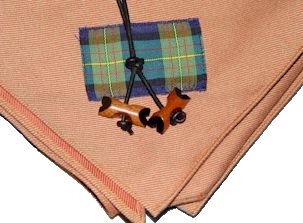
Wood Badge beads on top of the 1st Gilwell Scout Group neckerchief.

GB2GP is the call sign of The Scout Association Headquarters and campsite.  It is one of very few permanent special event call signs issued by the United Kingdom.  The shack is managed by scouters from around the UK, and exists to promote radio and technology to the young people of the Scout and Guide movements.

The scouting movement is a powerful force for good in our world.  Please support your local scouting organizations.

Good DX and 73, NJ2X

December 22, 2012

DX Technique: Taking A Break = Opportunity For A Modest Station

Working DX with a modest station or QRP (5w of power or less) is an interesting and challenging endeavour.  DX'ers regularly experience having more powerful stations with 1500W amplifiers, impressive towers, and beam antennas punch through to the target station and block the lower-power stations.  To succeed, low-power stations must use skill - brains over brawn.

Here we share a useful technique to help log that DX station when operating with low-power.  This is the scenario, the DX station announces that he must take a break (i.e. take a phone call, dog needs to go out, bathroom visit, refill coffee cup, grab a snack, answer the door, ...) and will be return. 


This represents an opportunity for the savvy lower-power station since this announcement will cause the pile-up size to immediately diminish.  Time (and human nature) is on your side since the longer the DX station is off-the-air the fewer people will stay tuned to the frequency.  Why?
  • As soon as the station stops calling, many people will leave the frequency in search of DX stations that are on-the-air.
  • Reported spots for the DX will start to age off and no new spots will be posted.
  • People tuning up-and-down searching for DX will not stop on the frequency since there is no DX calling.
The savvy DX'er will wait and listen and be ready to pounce when the DX station returns from his break.  Patience, listening, and being ready is the key to success.  You want to be the first station (without interference from a pileup) to respond and be heard.

We have used this technique with success and it can help you too.

Good DX and 73, NJ2X


Other related articles on NJ2X.COM:


© Michael W. Maher and NJ2X.COM, 2012. Unauthorized use and/or duplication of this material without express and written permission from this blog’s author and/or owner is strictly prohibited. Excerpts and links may be used, provided that full and clear credit is given to Michael W. Maher and NJ2X.COM with appropriate and specific direction to the original content.

December 19, 2012

DXCC Completed!

We are celebrating in the shack today on completing the requirements to earn the ARRL DX Century Club (DXCC) award. The DXCC award is a worthy challenge. To earn the ARRL DXCC award a ham must confirm 100 contacts each from a qualifying different DX entity. These entitities are defined in the DXCC list. To qualify, an entity must have some definable political or geographical distinctiveness.


Proof of a confirmed contact can be either a paper QSL card or a Logbook of the World (LoTW) QSL.  We are a big fan of the ARRL's LoTW so for an extra challenge we decided to we would confirm 100% of our qualifying DXCC contacts via the LoTW (and not use any paper QSL card confirmations).  This proved to be more of a challenge than we anticipated since we had to complete several contacts with many DX entities before locating a LoTW subscriber.

We also decided to make all of our contacts using transmitter power of 100W or less and with a simple wire antenna.  This meant we would not use amplifiers, towers, beam antennas for the DXCC contacts.  We were interested in demonstrating that the ARRL DXCC award is within the reach of hams with modest stations (like ours).

Today we filed our application when the 100th qualifying contact was confirmed in the LoTW.  Our award is #57,420.  What a great feeling!

Good DX and 73, NJ2X


PS: In 2012, the DXCC Desk processed 14,301 applications, comprising 1,491,661 QSOs.


© Michael W. Maher and NJ2X.COM, 2012. Unauthorized use and/or duplication of this material without express and written permission from this blog’s author and/or owner is strictly prohibited. Excerpts and links may be used, provided that full and clear credit is given to Michael W. Maher and NJ2X.COM with appropriate and specific direction to the original content.

November 30, 2012

DX Code of Conduct

  • I will listen, and listen, and then listen again before calling.
  • I will only call if I can copy the DX station properly.
  • I will not trust the DX cluster and will be sure of the DX station's call sign before calling.
  • I will not interfere with the DX station nor anyone calling and will never tune up on the DX frequency or in the QSX slot.
  • I will wait for the DX station to end a contact before I call.
  • I will always send my full call sign.
  • I will call and then listen for a reasonable interval. I will not call continuously.
  • I will not transmit when the DX operator calls another call sign, not mine.
  • I will not transmit when the DX operator queries a call sign not like mine.
  • I will not transmit when the DX station requests geographic areas other than mine.
  • When the DX operator calls me, I will not repeat my call sign unless I think he has copied it incorrectly.
  • I will be thankful if and when I do make a contact.
  • I will respect my fellow hams and conduct myself so as to earn their respect.

November 13, 2012

Bad Behavior

The pileups on PT0S (DX Expedition to Saint Peter & Saint Paul Rocks) this weekend were a mile tall.  A friend jokingly referred to it as a, "pigpile".  Maybe "pachyderm pile" would be more descriptive.  It was huge at times.

Anarchy reigned at moments with unruly lids running wild while the "radio police" attempted ad-nauseum to clear the DX frequency with shouts of "up up" or "get it together" or "he is working split tuner-upper" or "shut up" or "why the heck do you guys call on frequency?" or "split expletive-deleted".  Do the radio police interfere more than the hams that call the DX on his frequency?  There are three steps to avoiding the transgression of calling a DX station working split:  listen, listen, and then listen.

There was an unusually high degree of malicious ankle biter interference.  It didn't amount to much and tended to be weak, feeble, and ultimately impotent.  The DX kept tossing out calls and "599" and the hams just kept dropping their calls into the cacophony.  The whole DX operation ran like a big machine right over the top of the malicious ankle biters.

An apparently disgruntled ham came on the frequency (3.780 MHz) to complain about being interfered with on a nearby frequency.  This ruse was of course designed to get a response and create a feedback loop of interference.   It did seem to draw in a few and a useless shouting match ensued.  For many, it was embarrassing to listen to their own countrymen behaving so badly.  The DX station never missed a beat while dishing out a rapid fire stream of signal reports through the entire episode.

The correct response to malicious interference of any kind is to ignore it completely.  Malice driven interference runs on an ego-powered AAA-battery.  Starved of attention the egoist and his petty interference withers and fades away.

What does all this bad behavior mean?  If you are in the glass-is-half-empty camp then perhaps this is yet another indicator of the steady decline of our civilization.  However, if you are a glass-is-half-full person then perhaps you enjoy the challenge of cracking such a chaotic pileup.  If you are in the glass-is-all-full-because-it-is-full-of-air-too camp then you perhaps recognize the incredibly superb job the PT0S DX Expedition did.

Nothing says thank you to a DX Expedition more than a donation to fund the costly endeavour.

Good DX and 73,

NJ2X


© Michael W. Maher and NJ2X.COM, 2012. Unauthorized use and/or duplication of this material without express and written permission from this blog’s author and/or owner is strictly prohibited. Excerpts and links may be used, provided that full and clear credit is given to Michael W. Maher and NJ2X.COM with appropriate and specific direction to the original content.

January 10, 2012

What is the BEST DX Mode?

If you enjoy chasing DX you can increase your DX contacts by using, "the BEST DX mode".  Which mode is that you ask?  The BEST DX mode is.... all of them.  Hams around the world enjoy running different modes.  This means that if you confine yourself to only one or two modes then you risk excluding some potentially great contacts.  Add as many modes as you can to your repertoire and increase the opportunities to work DX.


By Michael Maher (NJ2X)

November 23, 2011

Chasing 10m FM DX

There are so many interesting modes in which to operate our amateur radios.  Most hams are familiar with the "meat-and-potatoes" modes like, CW, SSB, AM, and RTTY.  Surprisingly, few hams seem to have tried working DX with FM.  The return of sunspots provides ham with an opportunity to jump into FM DX'ing.  You can work 10m FM DX with a modest station - a 100W rig and an 10m antenna will do the job.

You can even work QRP (low power < 5w) FM DX when the 10m band is open.  This is really amazing thing to experience.  Give it a try sometime.  One approach is to start the QSO with higher power and then back the power level down to QRP and see if you can maintain the contact.  How low can you go?  Another approach is to simply work the contact with low power.

Kenwood TS-480SAT HF + 6m Transceiver

Generals, Advanced, and Amateur Extra's have HF FM privileges on the 10m band.  The United States HF band plan allows FM between 29.6Mhz and 29.7Mhz.

5 Tips for 10m FM DX
  1. Keep the QSO short  - 10m FM DX is fast paced since the conditions are typically unstable.  Make the exchange quickly so you can log the contact.
  2. Monitor beacons for 10m openings - When 10m is open, dial up the 10m FM band plan frequencies.
  3. Monitor spots for 10m FM - Monitor 10m spots and look for frequencies that fall within the US FM band plan.  Once you see a spot, move quickly as the station will often disappear quickly.
  4. 29.600Mhz is the FM simplex calling frequency.  This is a good place to start listening.
  5. Dial up-and-down.  FM simplex changes quickly.  Stations will appear and disappear.  Keep moving, listening, and pounce.
On November 20, 2011, we had a great time making 10m FM contacts with Europe including OK2OV (Czech Republic), PB2A (The Netherlands), and GI7AXB (Northern Ireland).  All of these contacts were with full quieting and rich audio.  10m FM DX can sound awesome!

If you have a 10m radio with FM, we encourage you to get onto 10m and try working FM DX.  You will be amazed that this typically local mode works so well over great distances.  You will also enjoy the nice clean sound of FM too.

© Michael W. Maher and NJ2X.COM, 2011.

October 25, 2011

10 SKED Tips for Hams

The term "sked" is shortened version of the word schedule. It can refer to a flight schedule, a baseball schedule, or any other type of schedule.  In the context of amateur radio, the term refers to a QSO schedule which is a date, time, frequency, and mode that two operators will meet to make a contact. The amateur radio sked is an extremely useful and productive way to acquire challenging or rare DX contacts. We would like to share of few tips about skeds to make the experience more enjoyable.

1) Communicate.  If possible, use instant messaging during a sked to help coordinate the contact. For example, if at the appointed time, the frequency is busy then it is simple matter to arrange a new frequency via instant messaging.  Email can suffice; through, it is asynchronous and a bit more tedious than instant messaging.

2) Call the station.  Call the station directly when starting a sked.  Avoid calling using a general call to the band (CQ, CQ, CQ). This makes the sked more efficient since it will minimize the possibility of competition from other stations trying to answer the call.  It is inconsiderate to arrange a sked and then make the station wait while you work other stations.  Also, you don't want other stations to answer your call and drown out a weak sked.

3) Be on-time.  Regardless if you are the requester of a sked or the receiver of a sked, once agreed, do show up on time. Nothing is more irritating than to spend time calling for a station that isn't there.  Don't be that guy or gal. If you can't make the sked as agreed then it is your responsibility to let the other party know in advance.

4) Express gratitude.  Be sure to thank the sked for helping you (even if the contact could not be completed). A little kindness goes along way.

5) Be helpful.  At the end of the sked, offer to help the sked with bands or modes he made need. The other station may just take you up on the offer and will certainly appreciate the gesture regardless.

6) Select a quiet frequency for a sked.  For example, the 20m PSK31 call frequency is 14.070. This frequency is almost always busy making it difficult to use for a sked.  A sked will be much quicker and effective on a quiet frequency. For weak or rare DX, it is essential to follow this rule.  Remember, you may not get a 2nd chance so make it count.

7) Be ethical.  Never discuss signal reports during the sked.  The exchange (typically call sign and report) must be over the air (not email, phone, or chat).  To do otherwise is only cheating yourself and is unethical.

8) Be courteous.  If for whatever reason the contact cannot be made or is very difficult, do not be critical of the other station trying to help you.  It is simply poor form to belittle another operator or a modest station.  Be thankful for the opportunity and try again when conditions are improved.

9) Be friendly.  Treat every new skeds as potential friendship.  Show the same courtesy to your sked contact as you would a friend.

10) Use the LoTW.  The majority of hams are now using the LoTW to confirm contacts and earn awards.  Your participation with the LoTW helps your contacts earn awards and achieve their goals.

For those already using the Logbook of The World (LoTW), check out my article, "Hunting for LoTW Stations."

If you haven't tried arranging a sked, give it a try. You may be surprised how much fun it is. If you are seasoned radio amateur or a new ham, follow these tips to make the sked experience a positive one for everyone involved.  Let's keep the international spirit of helping one another alive and well in the amateur radio community.


© Michael W. Maher and NJ2X.COM, 2011.

October 21, 2011

IF Shift Magic

One of our favorite controls on our Kenwood TS-480SAT HF transceiver is the Intermediate Frequency Shift (IF Shift).  With a simple turn of the IF Shift knob it is possible to reduce interference from an adjacent frequency without changing the center frequency.  IF Shift is effective at improving signals with voice (SSB), CW, and digital modes.  It does not improve AM or FM signals.


The IF shift is also useful to shift the tone of a voice (SSB) contact by cutting or boosting audio frequencies in the high or low end.  This little magic trick sometimes makes the difference between copy and no-copy for signals buried in the noise.  IF Shift is useful on radios with and without DSP.

Combining IF shift and selecting a specific IF filter center frequency and IF filter bandwidth is amazingly effective with CW and digital modes.  If you are unfamiliar with exploiting IF Shift on your rig, do give it a try with noisy signals.

Also try playing around with the various filters and IF Shift on your rig while monitoring the waterfall display on a computer with a program like Ham Radio Deluxe DM780.  The waterfall display provides an excellent way to visualize how the received signal is affected by the radio's filters.

With a little trial-and-error and practice you will quickly find that you are able to zero in on weak stations and improve the audio enough to make the contact.  We have used this technique countless times with PSK31, CW, and SSB with excellent results.  This technique is also useful to shortwave listeners equipped with a receiver offering SSB and IF shift capability.

Good DX and 73,

NJ2X

By Michael Maher (NJ2X)


© Michael W. Maher and NJ2X.COM, 2011. Unauthorized use and/or duplication of this material without express and written permission from this blog’s author and/or owner is strictly prohibited. Excerpts and links may be used, provided that full and clear credit is given to Michael W. Maher and NJ2X.COM with appropriate and specific direction to the original content.

October 5, 2011

Hunting LoTW Stations

The advantages of the Logbook of The World (LoTW) were apparent immediately when we first learned about the system.  The promise of matching QSL's (a confirmation of communication between two hams) instantly, instead of waiting months or even years for paper QSL's, is compelling by itself.  Automating QSL administration with electronic logging meant more time operating and less on paperwork.  Avoiding the cost of postage, paper, and ink meant more money for other things in the shack.  From our view the LoTW promised a win-win-win.


The challenges of the LoTW became visible only after having adopted the system.  The primary challenge is to find contacts that also participate in the LoTW.  Fortunately, the ranks of LoTW users continue to grow every day making it easier and easier to find and make contacts and LoTW QSL's.

Our approach in the beginning was a shotgun method - making contacts without concern if the station was a LoTW user or not.  As a result, LoTW QSL's were a minority and our progress toward WAS (Worked All States) and DXCC (DX Century Club) proved to be somewhat slower than we would have liked.

Our next strategy was to call and indicate we were looking for LoTW stations.  This seemed to improve the LoTW contact rate somewhat.  Again the progress toward WAS and DXCC was slow.

Over time, we learned of several resources on the web that can help identify, target, and locate LoTW stations.  Armed with information our LoTW contact rate improved greatly which ultimately help us earn the ARRL WAS and Triple Play (#464) awards.  Here are three excellent sources on the web for finding LoTW stations:

K3UK LoTW Sked - This is a really great site for meeting and making skeds with other hams using the LoTW.

LOTW Online Users Cluster - The purpose of this site is to locate stations who are registered in the LoTW.

HB9BZA LoTW User List -Compilation of information from many different sources identifying LoTW users.

QRZ - QRZ, is a wonderful source of worldwide call signs and data about hams including if they use the LoTW (or not).  How did we hams live without qrz.com back in the days before Al Gore invented the Internet and global warming?

QRZ Forum - SKED - QSO Scheduling - The QRZ SKED forum is a good resource for finding hams looking for a sked or to post your own request for a sked.

Interestingly enough, the ARRL does not provided a comprehensive list of the LoTW users or a database to query for this information.  That makes the above sources positively essential for hams attempting to make LoTW contacts and earn awards though LoTW QSL's.

As the saying goes, information is power.  Armed with the above you are now empowered to focus your search for LoTW stations on the air and hopefully rack up some serious LoTW contacts, QSL's, and awards.  These sites can help you enjoy the full benefits provided by the Log Book of The World.  If you don't use the LoTW, we hope this article will motivate you to get started with the LoTW today.

Stay tuned for the next articles in this series where we discuss various ways to leverage each of these websites to improve your LoTW contact rates.

Be sure to check out our related article, "Chasing DX The Easy Way with HRD DM780".

73,

NJ2X


Related articles:
HRD DM780 - variations of the 73 macro 
HRD DM780 Macros: Curse or Blessing?
HRD DM780 Calling Macro 


© Michael W. Maher and NJ2X.COM, 2011. Unauthorized use and/or duplication of this material without express and written permission from this blog’s author and/or owner is strictly prohibited. Excerpts and links may be used, provided that full and clear credit is given to Michael W. Maher and NJ2X.COM with appropriate and specific direction to the original content.

September 25, 2011

Good weekend for DX

Hurrah for sunspots and solar flares.  The daily sunspot number mean for the week of September 15 was 137.  Propagation inducing sunspots helped make this past weekend remarkable.  10m, 12m, 15m, 17m, 20m, 30m were all alive with easy contacts to Europe and North America.  We made several nice contacts on PSK31, CW, and RTTY.

NJ2X Electromagnetic Radiation Symbol


We picked up a WI station on 20m PSK31 leaving only three more states to go in order to complete 20m PSK31 WAS (all via LoTW QSL's).