July 13, 2012

What is a ferrite bead?


Ferrite is a ceramic made from various iron and other ferromagnetic oxides.  A ferrite bead is considered an electric component which effectively acts as an inductor.  Ferrite beads are often used to reflect and absorb RF (which is dissipated as heat).  The frequency range that a ferrite bead absorbs depends on the material it is made from.

"Type 31" and "type 43" ferrite material are both very popular in amateur radio applications such as EMI noise supression and common-mode chokes.  Common-mode chokes are very useful devices that can improve the received noise level by blocking EMI travelling along power and telephone cables within the home.  Common-mode chokes can also help reduce the level of transmited RF travelling in common-mode on the shield of transmission cable and keep it out the home.  Additionally, common-mode chokes can reduce the level transmitted RF travelling into sensitive devices via power cables and cable TV lines.

Fair-Rite publishes an excellent technical paper, "How To Choose Ferrite Components for EMI Supressions".

Be sure to also see our related article, What is the schematic symbol for a ferrite bead? on NJ2X.COM.

NJ2X's built this Anderson Powerpole pigtail with a ferrite bead to supress EMI riding on the 12v DC line

July 10, 2012

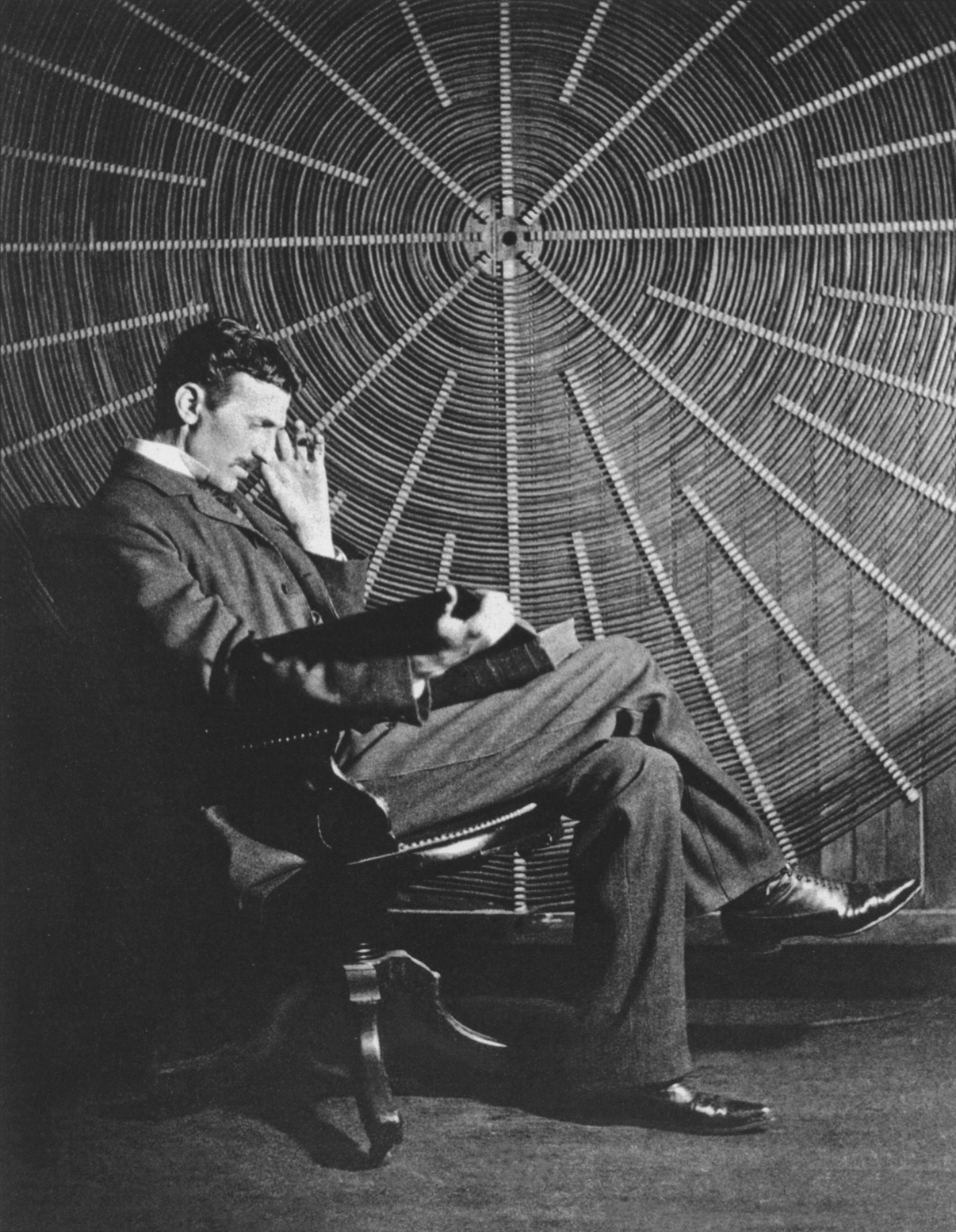
Nikola Tesla's Birthday July 10, 1856

Today we remember Nikola Tesla on his birthday.  Tesla was born on July 10, 1856 and forever left his mark on the world through his inventions and vision.

Tesla and spiral coil of his high-frequency transformer at East Houston St. 46, New York.

July 9, 2012

ISS Night Flight - Amazing!

This is positively amazing video footage.  Notice the incredible lightning flashes.


July 8, 2012

National Lightning Detection Network (NLDN)

Did you know the US has a national network of lightning detectors?


Lighting Strikes


The US has a network of over 100 sensors combining lightning detection, direction finding, and time of arrival techniques into an integrated system.  This network is called the National Lightning Detection Network (NLDN) and it is capable of detecting cloud-to-ground lightning flashes at distances up to 400 km across the contiguous United States and extending hundreds of miles into both oceans and beyond the borders of Canada and Mexico.

Be sure to check out our other lightning related articles here on NJ2X.com.

July 7, 2012

When thunder roars, go indoors!

When thunder roars, go indoors.


Be safe.  Don't take chances with lightning.

73, NJ2X


July 6, 2012

So what happens to window line in a lightning strike?

So what happens to window line in a lightning strike?

We had the opportunity to inspect sections of window line that had been subjected to the effects a lightning strike.  Interestingly, the copper wire was completely absent from the plastic.  Copper vampires?


There were a few clues.  The first clue was in the form of copper color specs on the insulation - almost as though it had been lightly and randomly sprayed on by a spray can.  An additional clue was the plastic which showed evidence of violent heating and had two burnt tracks running along where the copper had once been.

All the clues pointed to the copper having been completely vaporized in an instant by the lightning.  This must have been an incredibly violent moment and would have been frightful to witness.  Lightning is an extremely powerful force - it can have 100 million to 1 billion volts, and contains billions of watts.  As lightning passes through air, it can heat the air to 50,000 degrees Fahrenheit: about 5 times hotter than the surface of the sun.

We noticed that AE5X had a similar experience which he posted on his blog.


July 4, 2012

So how often does the Empire State Building get stuck by lightning?

Amazingly, the Empire State Building is struck by lightning, on average, over 100 times a year.  So lightning can and does strick the same place more than once.

Empire State Building Lightning Strike 2006

Can lightning strike an airplane?

This is a rather amazing video of  lightning striking an airplane mid-flight.  The plane and passengers were unaffected.  Lightning can strike and object in mid-air.  In fact, it is a relatively common occurrence for commercial aircraft to be struck by lightning.  Fortunately, all commercial aircraft are designed and equipped with lightning protection.


July 1, 2012

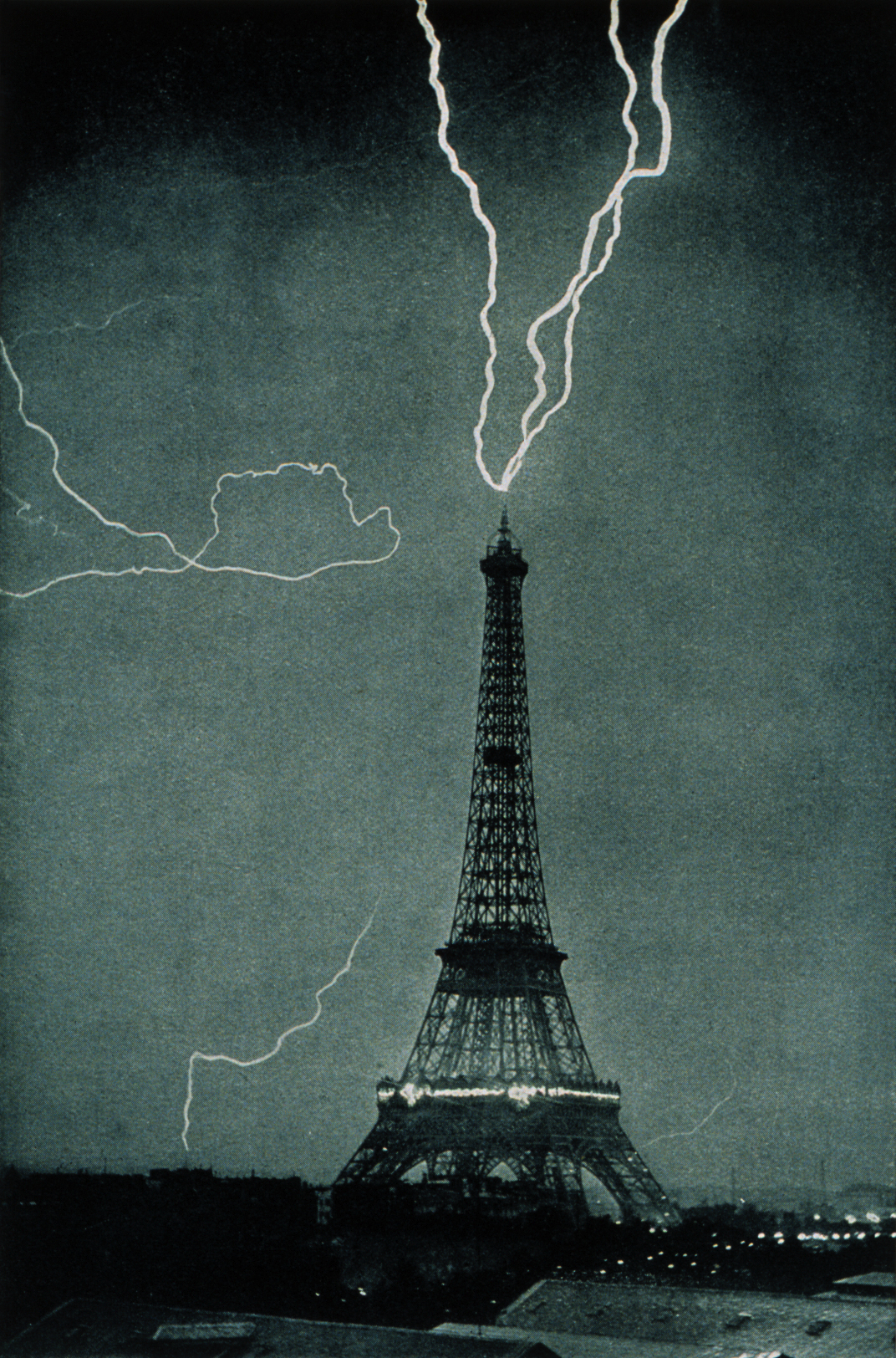
Lightning Strikes The Eiffel Tower

This is rather amazing picture Lightning striking the Eiffel Tower circa 1902.  Is your station grounding and lightning surpression up to task?

Lightning striking the Eiffel Tower 1902


June 23, 2012

ARRL Field Day - June 23 - 24, 2012

Its that time of year again folks - ARRL Field Day is here June 23-24, 2012!

Field Day is a contest, an emergency preparedness exercise, a public relations demonstration, a great event for clubs, and a great way to get on the air and have some fun.  The spirit of Field Day is to operate away from the shack, commercial power, under field conditions for 24 hours in June.

The objective is to work as many stations as possible on any and all amateur bands (excluding the 60, 30, 17, and 12-meter bands) and to learn to operate in abnormal situations in less than optimal conditions.   Field Day is open to all amateurs in the areas covered by the ARRL/RAC Field Organizations and countries within IARU Region 2.  DX stations residing in other regions may be contacted for credit, but are not eligible to submit entries.    

Checkout the ARRL Field Day website for complete details.  Don't forget the sun screen, bug spray, and plenty of snacks and water.

Hope to hear you all on the air.

NJ2X


Be sure to check out our related article on NJ2X.com:
Amateur Radio Field Day Food - QSL Quiche

June 22, 2012

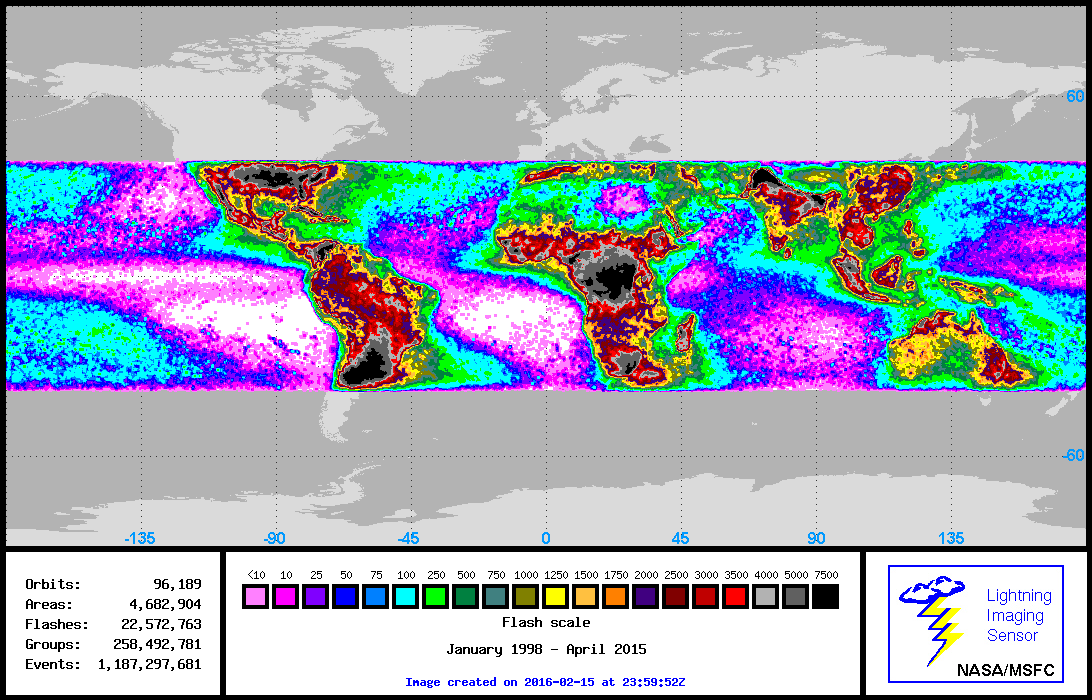
Visualizing Lightning

NASA maintains a cumulative visualization of global lightning strikes from January 1998 to present day from the NASA/MSFC Lightning Imaging Sensor.  This is a fascinating work and is perhaps compelling enough to motivate a few hams (especially those living in the high strike zones) to improve their station's grounding and lightning protection.


June 15, 2012

Amateur Radio Kids Day - June 16, 2012

Kids Day is an on-air event to encourage young people (licensed or not) to have fun with Amateur Radio. It is designed to give on-the-air experience to youngsters and hopefully foster interest in getting a license of their own. It is also intended to give older hams a chance to share their station and love for Amateur Radio with their children.

The traditional exchange for kids day is: name, age, location, and favorite color. Be sure to work the same station again if an operator has changed.  To draw attention, call “CQ Kids Day.”

  • Saturday, June 16, 2012
Kids Day always runs from 1800 UTC through 2359 UTC. Operate as much or as little as you like.

We have enjoyed operating on kids day in year's past.  It has always been a lot of fun.  99% of the contacts have been very positive.  The best contacts have been with hams who are patient and encouraging to the youngsters (a.k.a Potential Future Hams).

We have encountered one or two not-so-patient and not-so-encouraging contacts.  These hams seemed to have not been aware of the kids day event nor understood the intent.  If you belong to an amateur radio club or net please pass the word about this year's kids day event.

Raritan Valley Radio Club Hamfest June 16, 2012

For New Jersey area hams, the Raritan Valley Radio Club Hamfest is on June 16, 2012.  Hope to see you all there.